
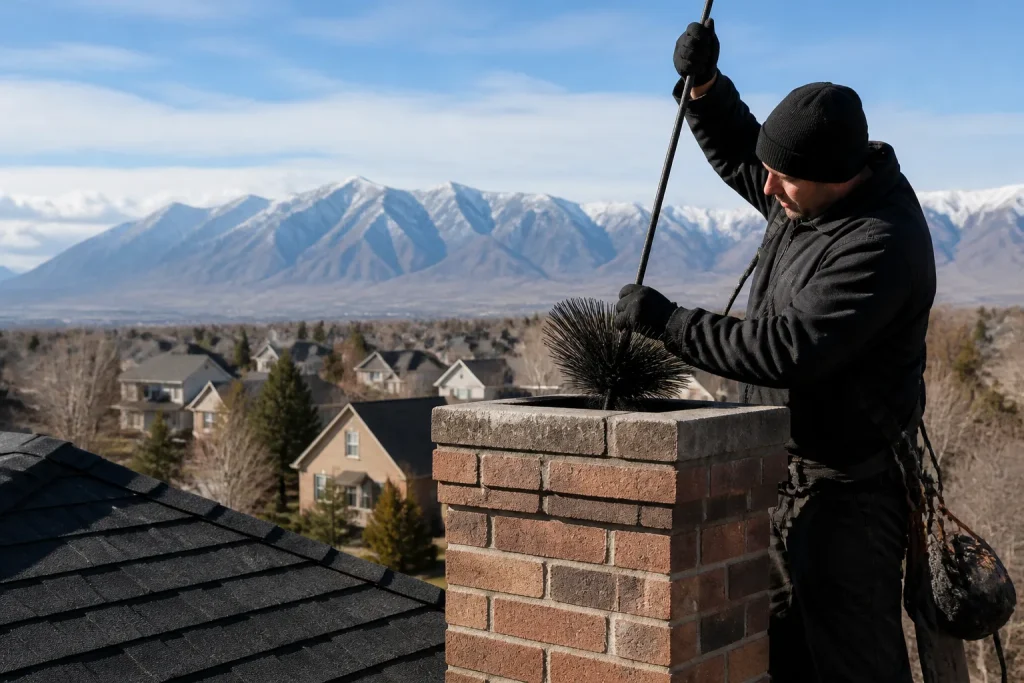
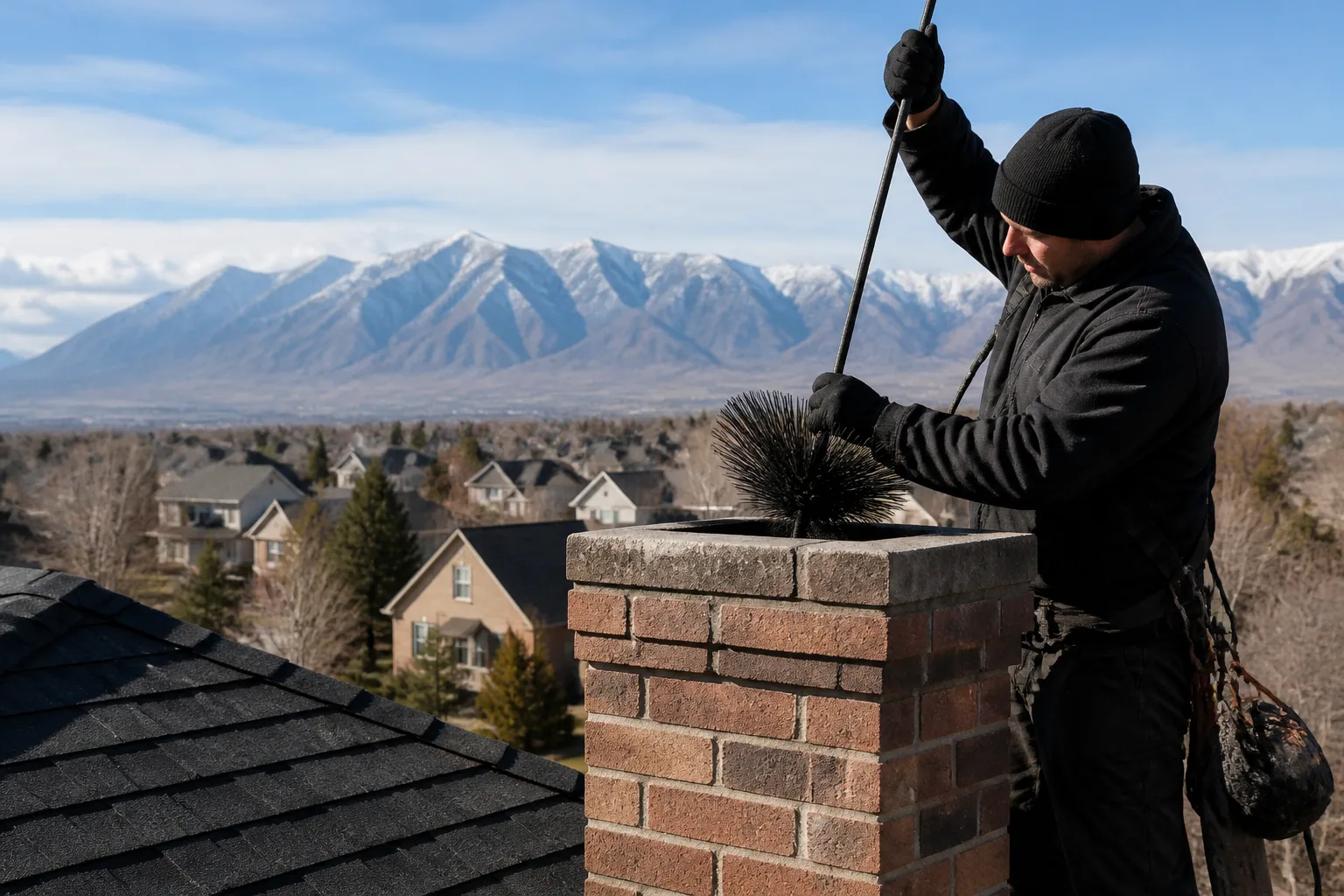
DuraFlex Chimney Sweep in Layton: A Homeowner’s Guide
If a chimney company recommended DuraFlex for your Layton home but couldn’t tell you which alloy grade they’re installing or why that matters for your specific appliance, the recommendation was probably based on what was on the shelf, not on what your chimney actually needs. DuraFlex is a specific stainless steel lining system with real engineering behind it, and the details decide whether it works for decades or fails in a few winters. This guide covers the parts of a DuraFlex installation most homeowners never hear explained.
What DuraFlex Actually Is (And What It Isn’t)
DuraFlex is a flexible, corrugated stainless steel chimney liner system. It’s manufactured in two alloy grades: 316Ti, a titanium-stabilized stainless steel, and 304, a more standard stainless alloy. The liner arrives as a continuous flexible tube that gets fed down your existing flue, then connected at the top to a termination cap and at the bottom to your appliance connector. That flexibility is the whole point. It allows a liner to follow a flue that has offsets, bends, or a slight crook, which rigid liner sections can’t do without cutting and fitting.
Where does the flexible format make sense? Any Layton chimney with an offset or an irregular flue path, which describes most of the older brick chimneys in the city. Where is it a workaround? When an installer uses flexible liner because measuring and fitting rigid sections takes more skill and time. That’s not automatically wrong, but you should know which situation you’re in. A flexible liner that’s properly sized and insulated performs well. A flexible liner that’s undersized or uninsulated just hides a draft problem behind a shiny tube.
In our experience, the material is rarely the failure point. The installation details around it are.
The Alloy Grade Question You Should Always Ask
Ask your installer which alloy they’re using. There are two answers, and the right one depends on what you burn.
- 316Ti is the grade to specify for high-moisture applications, especially gas appliances. Gas combustion produces more water vapor than wood, and that condensate is acidic. The titanium stabilization in 316Ti helps the alloy resist that attack.
- 304 is a solid choice for wood-burning systems, where flue gases are hotter and drier.
Why does grade matter more in Layton than in a humid climate? Layton sits in a high desert valley with cold winters and significant snowmelt. Chimneys here experience wide temperature swings between heating season and summer, and condensation inside a flue is a real concern during shoulder seasons when fires are small and flue temperatures stay low. A grade mismatch compounds that. A 304 liner in a gas application with heavy condensate can pit and fail well before its expected service life. That’s an avoidable problem, and it’s the kind of thing a trained eye catches at the spec stage, not after the fact.
If a contractor can’t tell you the grade or explain why, treat that as a reason to get a second opinion. You’re entitled to a straight answer.
Why Sizing Decides Whether Your New Liner Works
An undersized liner is the most common reason a brand-new installation performs worse than the old chimney did. Size is calculated from two things: the appliance’s BTU output for wood and gas inserts, or the firebox opening dimensions for an open masonry fireplace. Get that calculation wrong and you create a draft problem that no amount of fire-building skill will fix.
Here’s the counterintuitive part: a larger flue isn’t better. An oversized flue lets hot gases cool too quickly, which weakens draft and increases creosote deposits. An undersized flue chokes the appliance and pushes smoke back into the room. The right diameter sits in a narrow band, and calculating it takes a few minutes of math and a clear understanding of the appliance.
Ask your installer to show you the sizing calculation. A reputable one will have it in writing as part of the job documentation. In Layton, where many homes have older fireplaces that were later fitted with inserts, the calculation matters even more. Inserts change the appliance specifications, and a liner sized for the original open firebox is often wrong for the insert now sitting in it.
What a Proper DuraFlex Installation Requires Beyond the Liner
The liner itself is only part of the job. Three things separate a good installation from a liner that’s technically present but not doing its job:
- Insulation wrap. Any section of flue that runs through an unheated attic, an exterior chase, or an unheated garage needs an insulation wrap around the liner. Without it, flue gases cool before they reach the top, draft weakens, and condensation forms inside the liner. This is the detail most often skipped when an installer is trying to fit a job into a tight schedule.
- Proper top termination. The liner needs a secure cap assembly at the top that seals the flue, sheds water, and keeps out birds. A liner that ends without a proper top plate lets water run down between the liner and the flue tile.
- Compliant bottom connector. The fitting at the firebox or appliance has to match the appliance and meet code. A loose or improvised connector is a smoke and carbon monoxide pathway into the living space.
We use DuraFlex systems because they’re engineered to work with all three components as a set, not just as a tube. But the set only works if the installer treats all three as mandatory.
How to Verify a DuraFlex Installation After the Fact
If you’re looking at a chimney that already has a liner and you’re not sure it was done right, here’s what you can check:
- Look up from the firebox opening. You should see a clean, continuous liner transition into the connector with no gaps, no caulk smeared over a bad joint, and no visible rust streaks.
- Ask for the documentation. A proper installation should produce three things: the sizing calculation, the alloy spec sheet (stating 316Ti or 304), and a record of any insulation wrap installed.
- Check the top. From ground level, you should see a proper cap and top plate, not just a liner end poking out of the flue.
- Note how it burns. If the fireplace smokes into the room when the fire is warming up, the draft is weak. That’s a sizing or insulation question, not a firewood question.
Layton homeowners have called us after a new liner installation because the fireplace smoked worse than before. Sometimes we find a sizing error. Sometimes we find no insulation wrap through the attic. We never recommend relining again without showing the customer exactly what we found with a camera inspection.
When to Call a Pro
Some checks are homeowner-safe. Looking up at the firebox connector and noting whether the fireplace drafts properly doesn’t require a ladder. But anything involving the top of the chimney, the appliance connection, or the structural condition of the flue needs a trained professional, and we mean that literally. The top of a Layton roof in winter is no place for a homeowner with a flashlight, and the bottom connector involves gas and combustion equipment that carries real safety consequences when handled wrong.
We inspect it, clean it, and fix it, in one visit, from one company. That matters when the inspection finds a sizing problem or a worn connector: the next step in the same visit is a proper repair.
Related Services in Layton
If you’re booking a liner evaluation, it’s worth pairing it with a full chimney inspection so we can look at the flue, the firebox, the cap, and the crown together. If your fireplace itself has been showing its age, our fireplace repair work covers the firebox and damper side. For masonry cracks, crown issues, or a flue that needs structural attention, see chimney repair. And if you just want the flue cleaned before you decide on anything else, our chimney sweep service starts there.
What happens when you call
- 1
A real person answersNo phone trees – you reach a local pro.
- 2
You get an upfront price rangeHonest numbers before anyone is dispatched.
- 3
A background-checked tech heads outLicensed & insured, dispatched right away.
- 4
You approve before work beginsNothing starts until you say go.
The Bottom Line
DuraFlex is a good system, and it’s the right choice for a lot of Layton homes. But the liner brand is only one part of the specification. The alloy grade, the sizing calculation, the insulation wrap, the top termination, and the bottom connector all have to be correct, and they all have to be documented. Ask for those details. A contractor who can explain them is the contractor you want. One who can’t is guessing.
If you’re in Layton and need help, Layton Chimney Sweep offers free estimates. Call (877) 492-2589. We answer 24/7. Fast dispatch from 7am to 7pm, Sunday through Friday.
Frequently Asked Questions
316Ti is a titanium-stabilized stainless alloy designed for high-moisture applications, especially gas appliances where condensate is acidic. 304 is a standard stainless grade that works well for wood-burning systems with hotter, drier flue gases. The right grade depends on your appliance, and asking which one you’re getting is a fair question. Call (877) 492-2589 for an exact quote. Estimates are free.
Not always. A clay tile flue in good condition, with no cracked tiles or gaps at the joints, may not need a liner unless you’re installing a new insert or gas appliance that requires one. The honest answer comes from an inspection. Nothing is recommended without camera evidence you can see for yourself, and if the flue can safely wait, we’ll say so. Call (877) 492-2589 for a free estimate.
Ask for the sizing calculation in writing. It should be based on your appliance’s BTU output or your firebox opening dimensions. A liner that’s badly undersized creates weak draft, smoke spillage, and heavier creosote deposits. If your fireplace smokes when you start a fire, the sizing is a likely culprit. Call (877) 492-2589. We answer 24/7.
No. A chimney sweep cleans the flue; a liner is a repair or upgrade. A sweep is maintenance and a liner is a structural fix. They’re often done in the same visit, but they’re different jobs. If you’re not sure which one you need, a full-service Layton Chimney Sweep inspection sorts it out. Call (877) 492-2589 for a free estimate.
Written by the team at Layton Chimney Sweep.
Need Chimney Cleaning Help?
Call Layton Chimney Sweep - the local pro we connect you with is licensed and insured, here with fast help in Layton.
(877) 492-2589