
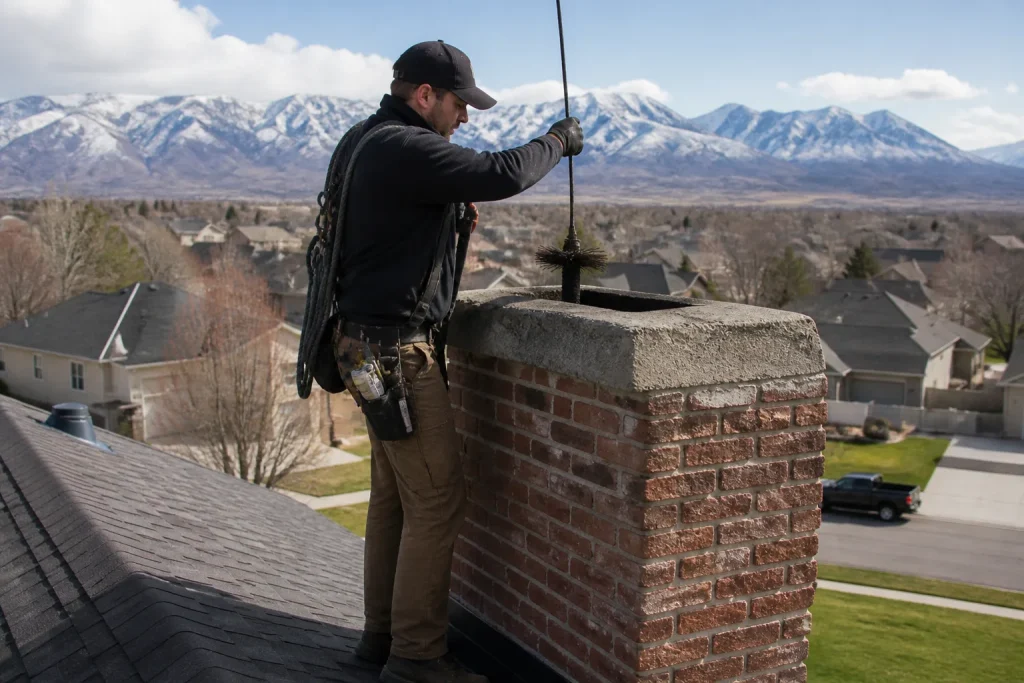
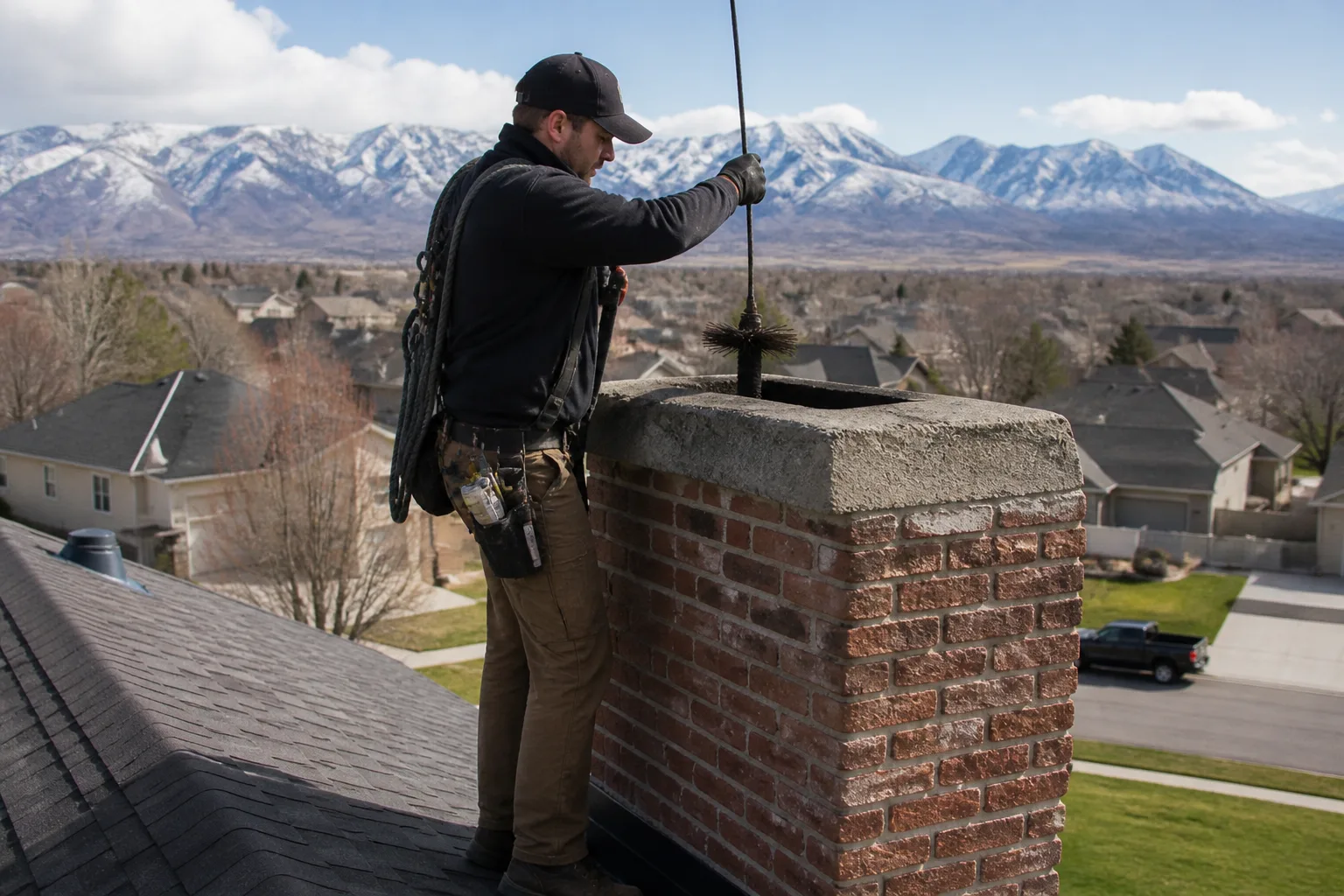
Emergency Chimney Sweep Near Me: What Layton Homeowners Should Do First
Most chimney fires go out on their own. That’s the part nobody warns you about, and it’s also the reason so many Layton chimneys that “seemed fine” turn out to have cracked flue tiles months later. If you’re reading this because something happened tonight, here’s the short version: the next twenty minutes are about containing the situation safely, not fixing it. Stop adding fuel, get everyone out of the room, and call (877) 492-2589. We answer 24/7. Fast dispatch from 7am to 7pm, Sunday through Friday.
What Counts as a Chimney Emergency? Three Different Problems, Three Different Responses
“Chimney emergency” gets used for three situations that share almost nothing except the word emergency. The right first move depends entirely on which one you’re in – and getting it wrong is how a manageable problem turns into a call to the fire department.
1. An active chimney fire
Signs include a roaring sound like a freight train, popping or crackling, flames or thick smoke from the top of the chimney, and a strong burning smell. Some chimney fires are slow and quiet and you may notice nothing except a sudden shower of black flakes on the roof or in the firebox. The protocol: get everyone out of the house, call 911, and stay out. Do not stand near the chimney. Do not open the firebox door.
2. Smoke backing up into the living space
Smoke rolling into the room instead of up the flue usually means a blocked flue, a closed or broken damper, or a negative pressure problem in the house. This one is a carbon monoxide risk even without a fire. Open a window near the fireplace to relieve pressure, get people and pets out of that room, and don’t light anything else until it’s inspected.
3. A structural crack or displacement after an earthquake
Layton sits where seismic movement is a real consideration for masonry chimneys, and an unreinforced brick chimney is one of the more vulnerable parts of an older house. If you see a new crack in the chimney exterior, a gap where it meets the roof, or a chimney that looks tilted, stop using the fireplace immediately and stay off the roof. This one needs eyes on it before anything else happens.
Whichever category you’re in, chimney sweep service after the event is the starting point, not the finish line.
What You Should NOT Do in the First Twenty Minutes
Well-meaning reactions cause a surprising share of the damage we see when we’re called out after an incident. Four of them come up again and again.
- Don’t open the damper wider to “let it breathe.” A chimney fire feeds on air. More oxygen means a hotter, more damaging fire, and it can spread heat into the framing.
- Don’t throw water into the firebox. On a fire that’s still burning in a hot firebox, water can cause a violent steam flash. It can also crack hot masonry or a liner from thermal shock.
- Don’t build a hot fire to “burn the creosote clean.” This is the single most dangerous myth in chimney care. Glazed creosote ignites at high temperatures; a hot fire is exactly the condition that lights it off.
- Don’t close off the flue completely during a fire. You want the smoke to have a path out of the house, not into your living room.
If you’re unsure whether the fire is really out, assume it isn’t and call 911. Firefighters would rather find a cold chimney than a hot one.
Why the Inspection After the Incident Matters More Than the Cleaning
The fire itself is the event. The damage it leaves behind is the part that hurts people weeks later. A Level 2 inspection is the mandatory next step after any suspected chimney fire, backdraft event, or structural concern, and it is not optional or skippable “if the chimney looks fine.” It covers:
- A camera inspection of the full flue, including the liner and flue tiles you can’t see from the firebox.
- Checking for cracks, gaps, spalling, and separation between liner sections – the paths that let carbon monoxide and heat reach framing.
- The firebox, damper, smoke chamber, and chimney exterior, including the crown and cap.
- A written photo report so you can see exactly what we saw.
This is the inspection standard the industry works to, and it’s the one we follow. During an inspection we routinely find cracked tiles and failed joints that a chimney sweep alone would never catch. When we do, we can reseal with HeatShield or reline with a DuraFlex system in the same relationship – no separate vendor, no second visit. And when there’s nothing wrong, we say so. Nothing gets recommended without camera evidence you can look at yourself.
What an Emergency Sweep Actually Fixes (And What It Doesn’t)
An emergency sweep clears the creosote, soot, and blockage that made the situation dangerous in the first place. It gets your chimney back to a safe starting point. It does not rebuild a cracked crown, reline a failed flue, or repair spalled masonry.
What a sweep resolves on its own:
- Stage 1 and Stage 2 creosote buildup
- Blockages from nests, leaves, or debris
- General soot and ash cleanup
What usually needs follow-up repair work:
- Glazed Stage 3 creosote, which often damages the liner as it burns
- Cracked or displaced flue tiles
- Failed mortar joints, spalling brick, or a cracked crown
- A missing or damaged cap that let water and animals in
- Structural movement after seismic activity
We tell homeowners this upfront so the sweep isn’t a surprise bill later. If a repair can wait safely, we’ll tell you that too. chimney repair is the category most post-fire work falls under, and we’d rather you know before we start than after.
Document It Before the Sweep Arrives: An Insurance Checklist
Insurance claims go smoother with evidence collected while it’s fresh. Do this only when it’s safe, and never re-enter a burning or smoking structure.
- Photograph the chimney from the ground and any visible interior signs – smoke staining, cracked tiles, soot on the firebox face.
- Note the date and approximate time of the incident, and describe what you heard or saw.
- Save the fire department report if one was filed.
- Keep receipts for any emergency response cost, including fire department fees.
- Write down what kind of wood you burn and roughly how often the chimney was previously cleaned. Insurers ask.
- Don’t throw away damaged materials until your adjuster says it’s fine.
Bring that list to your inspection and we’ll add our photo report to it. That combination of your documentation and our camera evidence is what most adjusters want to see.
How Often Should a Layton Chimney Be Swept?
Once a year is the general rule for a fireplace in regular use, and the recommendation is based on buildup, not the calendar. Dry pine burns dirty; a season of it can leave more creosote than hardwood ever would. If you’ve had a chimney fire of any size, the annual timeline resets to now.
A chimney cap and crown installation is the other proactive step worth considering – it’s the cheapest way to keep water, birds, and debris out of a flue you just had cleaned. We can handle that in the same visit as the sweep.
When to Call a Pro
If you’ve had any of the events above, call. If you’re simply unsure whether the chimney needs sweeping – a little smoke back puffing on cold mornings, a smell on humid days, black flakes near the firebox – call and get it inspected rather than guessing. Our technicians have up to 12 years of experience, and the estimate is free. Call (877) 492-2589. We answer 24/7. Fast dispatch from 7am to 7pm, Sunday through Friday, and a call outside dispatch hours is booked into the next opening.
Related services in Layton: if you discover a damaged firebox or insert after the inspection, fireplace repair often happens in the same visit.
The Bottom Line
- Chimney fires often go out on their own, but the damage they leave behind is what causes later problems.
- Get out of the house during an active fire, call 911, and don’t try to “help” the fire.
- A Level 2 inspection with camera evidence is the required step after any incident – the sweep alone doesn’t cover it.
- Document what happened before your inspection so insurance has what it needs.
- Get your chimney evaluated by a professional rather than waiting for a smell or a puff of smoke to tell you something’s wrong.
If you’re in Layton and need help, Layton Chimney Sweep offers free estimates – call (877) 492-2589. We answer 24/7, with fast dispatch from 7am to 7pm, Sunday through Friday.
Frequently Asked Questions
Pricing is per job and set by the written estimate, which is free. The sweep itself covers clearing creosote and blockage; any repair work found during the inspection is quoted separately. Call (877) 492-2589 for an exact quote.
Yes. A small fire can still leave cracked tiles or failed liner joints you can’t see from the firebox, and those are the paths heat and carbon monoxide take. A camera inspection is the only way to find them.
Not until a professional has inspected the flue and pressure conditions. A backdraft points to a blockage or a pressure problem, and both are unsafe to burn through. Call (877) 492-2589 and we’ll get it looked at.
Stop using the fireplace and stay off the roof. A structural crack in masonry or a shifted liner needs a professional inspection before any fire is lit again.
Written by the team at Layton Chimney Sweep.
Need Chimney Cleaning Help?
Call Layton Chimney Sweep - the local pro we connect you with is licensed and insured, here with fast help in Layton.
(877) 492-2589